Turnkey vs Traditional Interior Contracts: Comparison
Author
Priya Sharma
Published
27 April 2026
Read Time
8 min read
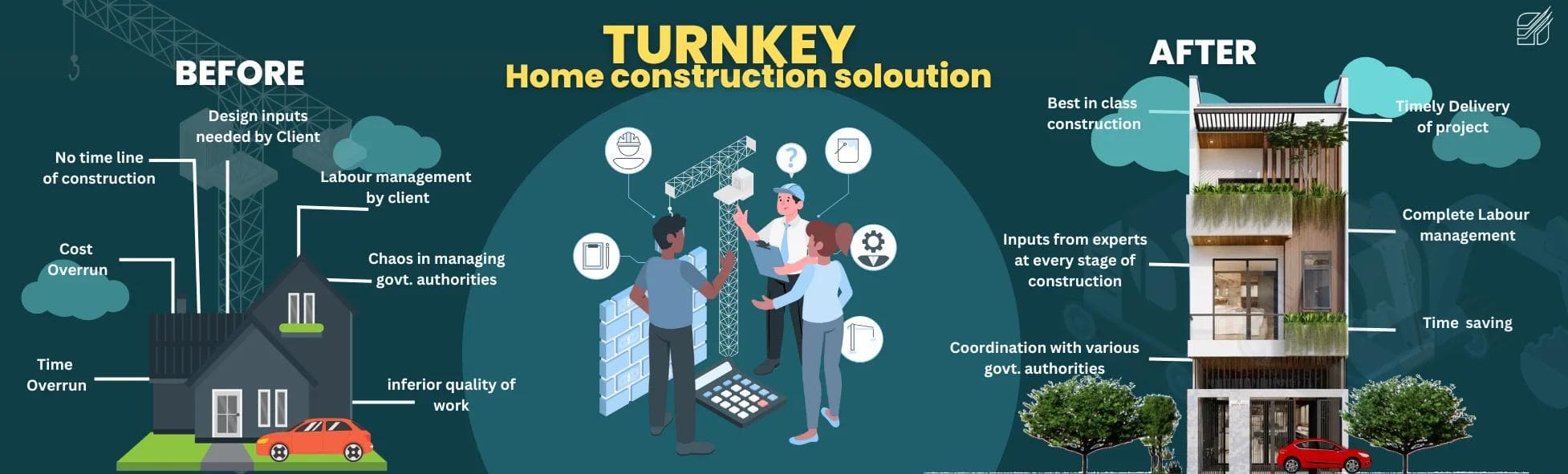
Choosing the right execution model is one of the most important decisions in any interior project. Businesses often face a common dilemma—should they go for turnkey solutions or traditional contractor-based execution?
Understanding the difference between these two approaches helps in making a smarter and more efficient decision.
What is a turnkey interior contract
Turnkey means a single team handles the entire project
It includes
• Design
• Execution
• Material sourcing
• Final delivery
The client receives a ready-to-use space.
What is a traditional interior contract
Traditional contracts involve multiple parties
• Separate designer
• Different contractors
• Independent vendors
The client manages coordination between all.
Key difference in responsibility
Responsibility is the biggest difference
• Turnkey → single point accountability
• Traditional → multiple teams involved
This directly affects project efficiency.
Project execution approach
Execution style varies significantly
• Turnkey → streamlined and integrated
• Traditional → step-by-step and fragmented
Turnkey ensures smoother workflows.
Coordination and communication
Coordination is easier in turnkey
• One team handles everything
• Faster communication
Traditional setup often leads to
• Miscommunication
• Delays
Time efficiency and speed
Turnkey is faster due to
• Parallel workflows
• Better planning
Traditional projects take longer because
• Tasks are dependent
• Coordination delays occur
Quality control differences
Quality consistency varies
• Turnkey → standardized processes
• Traditional → depends on multiple vendors
This impacts final output.
Flexibility and customization
Both approaches offer flexibility
• Turnkey → controlled customization
• Traditional → higher flexibility but less control
Choice depends on project needs.
Risk and accountability
Risk handling is different
• Turnkey → risk managed by one team
• Traditional → risk distributed across vendors
Turnkey reduces client stress.
Transparency and control
Traditional gives more direct control
Turnkey offers
• Better transparency through structured updates
• Less involvement required from the client
Which one should businesses choose
Choose turnkey if you want
• Faster execution
• Less coordination
• Hassle-free process
Choose traditional if you prefer
• Direct involvement
• Custom vendor selection
Final insight
Both turnkey and traditional contracts have their advantages
However, for modern commercial projects, turnkey solutions are increasingly preferred due to speed, efficiency, and simplicity
The right choice depends on your project goals and management preference